Bibi Mahru
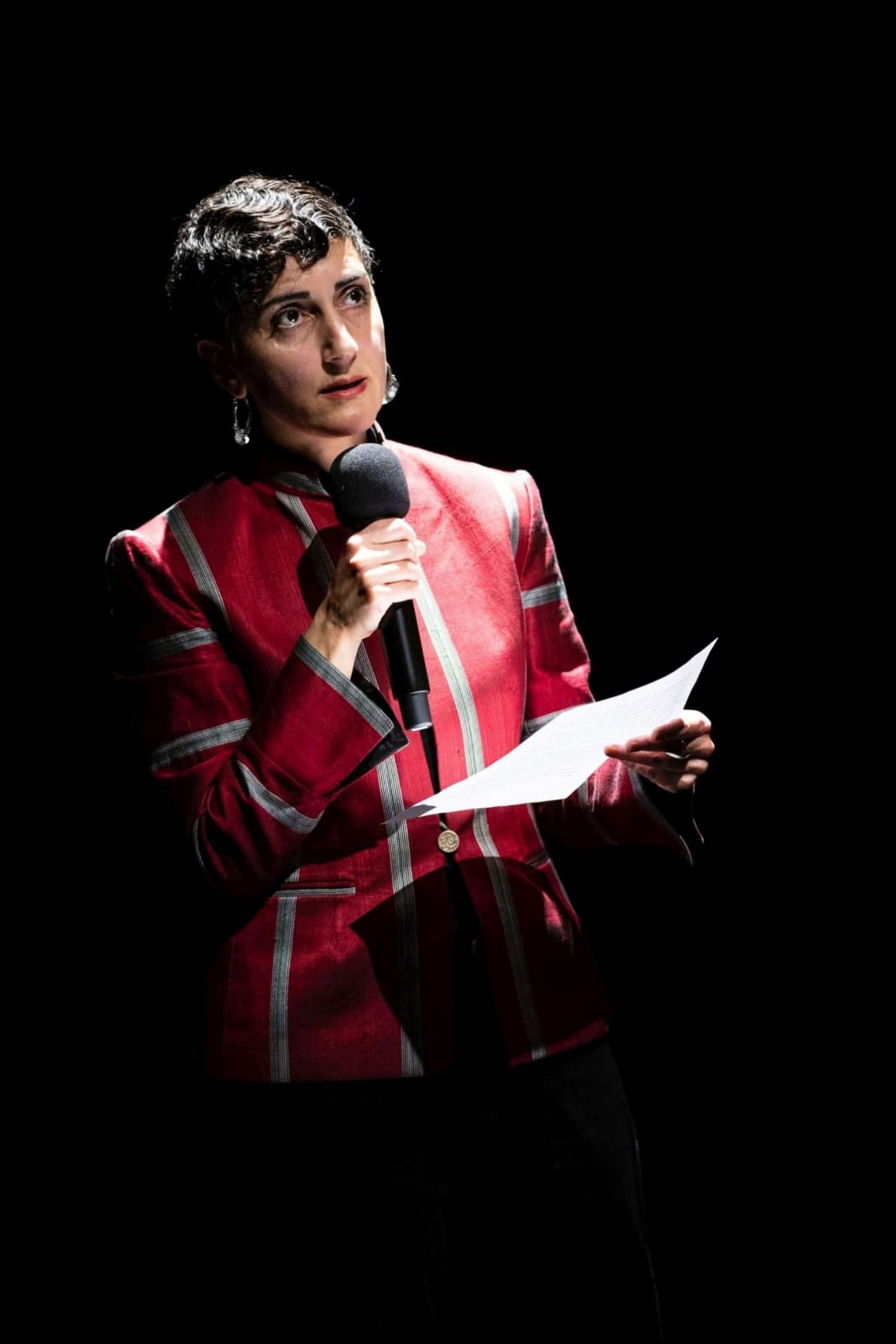
سارة إحسان
Sara Ihsan
Who will jump from the five-meter diving board into the five-meter-deep swimming pool without water again? Fortunately, the smell of feces, rotting garbage, and other filth was blown away by the strong wind.
It takes a certain amount of daring and no small amount
of overconfidence to think of a swimming pool at this height. Surrounded by
tank wrecks and dilapidated ruins, or walls where a building once stood, the
lords of this earth cavort. She, alone, in her gray coat, struggling to keep
the front slit closed so that no one can see her crotch covered by her pants.
No one here can be expected to see so much thigh and triangle.
The cars full of men drive by and turn their necks as
far as they can to look at her, laughing and joking. How much might she cost?
The guy in the white shirt is probably the owner. She could be one of us.
“Unfortunately, I don't have any money with me,” he calls out to his equally
brazen friend.
She tries to listen, constantly fighting against the
wind, which would love nothing more than to tear her clothes and headscarf off
her body. “What's she doing here?” There are no other women far and wide; she
is the only one of her gender, the only female who has even chosen a female
name for herself.
Bibi Mahru, “Lady Moonface,” and all these human and
technical wrecks, an empty five-meter-deep swimming pool, four diving boards
without divers, bent and rusted scaffolding poles—they have now survived.
Every man tramples on her. Of course, it's not pleasant
for her to walk through these disgusting glances as a prostitute, while really
enjoying the incredible landscape, these mountains that don't want to blow the
smog out of the city, these graves that nestle at Bibi Mahru's feet, these
green gardens that are visited by 99% men.
Yes, you have had many lovers,
each leaving something behind on you, his last hope,
his urine, his longing, his syringe, perhaps the penultimate one, his plastic
bag of mirabelle plums or his bottle of water. But some loved you so deeply
that they even fought over you.
Mahru, heroes have fought and
killed over you, criminals and drug dealers. Mahru, you are a living museum,
who could have guessed what a truly beautiful thing could become.
A kind of garbage dump of wars, a
museum without an entrance ticket, a place of rest for half of humanity, a hill
where it is easy to slip.
Just look at her, how she stumbled
on the slope and none of the heroes reached out to her. An old man in his
toilet seat looks around for her as she screams and loses her headscarf. The
wind, the wind has finally done it.
The slit is already open, and not
only that, but her whole body is lying there, exposed, scratched by the rough
pebbles.
Our beautiful Mahru, who accepts
no competition. The gray coat with torn buttons finally lands in front of the
barbed wire of the clinic that has spread out at her feet, a military hospital.
Mahru, so this is how you treat your daughters. Bitterness radiates from your
wrinkles and rough skin.
Mahru, when will you free yourself
from his clutches? Mahru, you stink. Mahru, how beautiful you are to look at
from above, thank you, thank you for this view, at least for that.
She doesn't move, the figure in
the gray coat,
she has broken her wings,
forever.
(Kabul, May
15, 2009)
works as a certified coach and anti-discrimination
consultant, author and sworn translator/interpreter in Karlsruhe. She lived in
Tehran until she was eight, where the Iran-Iraq War and the Islamic Revolution
shaped her childhood.
She started writing at the age of 14. Her interest later led
her to take an advanced German course and study literature at the University of
Heidelberg, where she completed her master's degree in 2008. During her studies
she began publishing poems in various anthologies and magazines. Second
study programme: Nonprofit Management & Governance at the University of
Heidleberg.
Sara Ehsan, an Iranian Studies graduate, has worked as an interpreter and translator for Farsi and Dari for more than two decades. Her experience ranges from interpreting in consultations to the Federal Court of Justice. Her strong sense of justice led her to choose an additional career in the social sector as a social counselor for refugees.